Wellsent
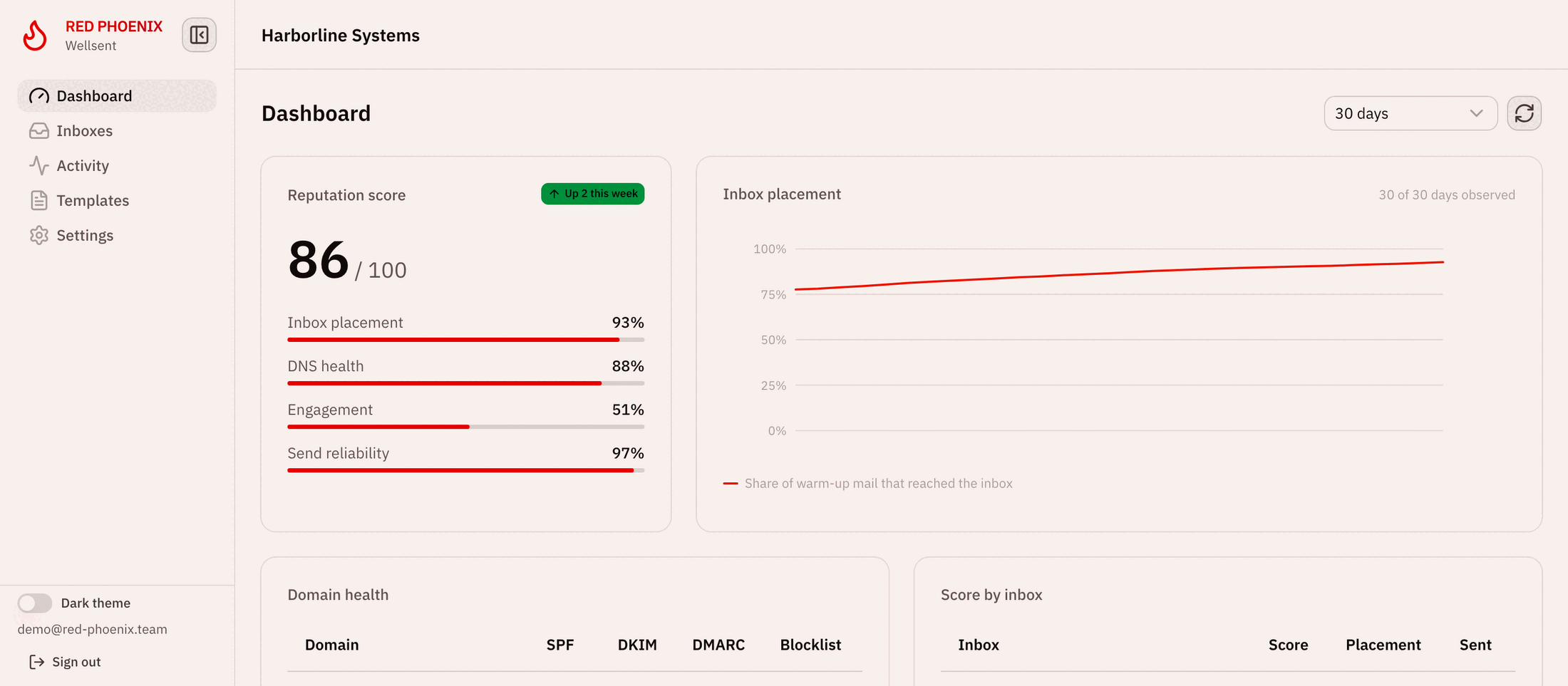
The deliverability platform we built instead of renting one. It takes a cold mailbox to full sending volume in sixteen days: one install covering every client workspace, with every signal behind the score open to inspection.
Why we built it
Every agency running outbound rents its deliverability, per mailbox, per month, indefinitely, from a service that returns a score and shows none of its working. The bill scales with your client book, the reputation you build is never quite yours, and the day you stop paying it stops being maintained. We wanted the domains we send from warmed by something we owned outright: our own pool, our own infrastructure, our own numbers. So we built the whole thing: the engine, the mailbox pool, the dashboard, and the provisioning underneath it. Wellsent is an in-house product, not client work.
How it works
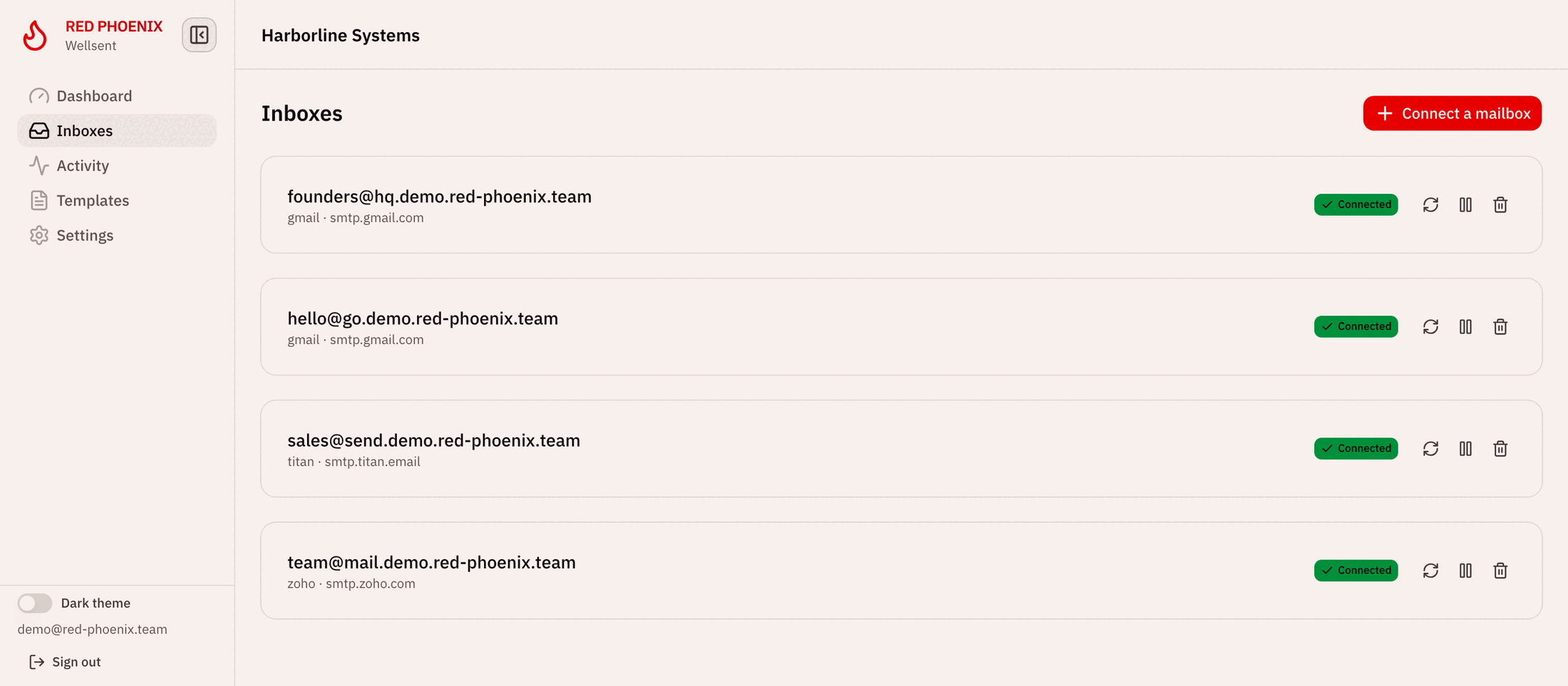
Connect a mailbox and it starts holding real conversations with a pool of inboxes we own. Ten sends on day one, climbing to full volume by day sixteen, gradual enough that no provider ever sees a burst. Every five minutes it sweeps inbox and junk on both sides, records where each message landed, and lifts warm-up mail back out of spam. Replies are composed in-thread by an LLM, so a thread still reads like a thread four turns deep rather than the same template on repeat. Every signal it collects is one you can open up and read.
Writing mail that lands
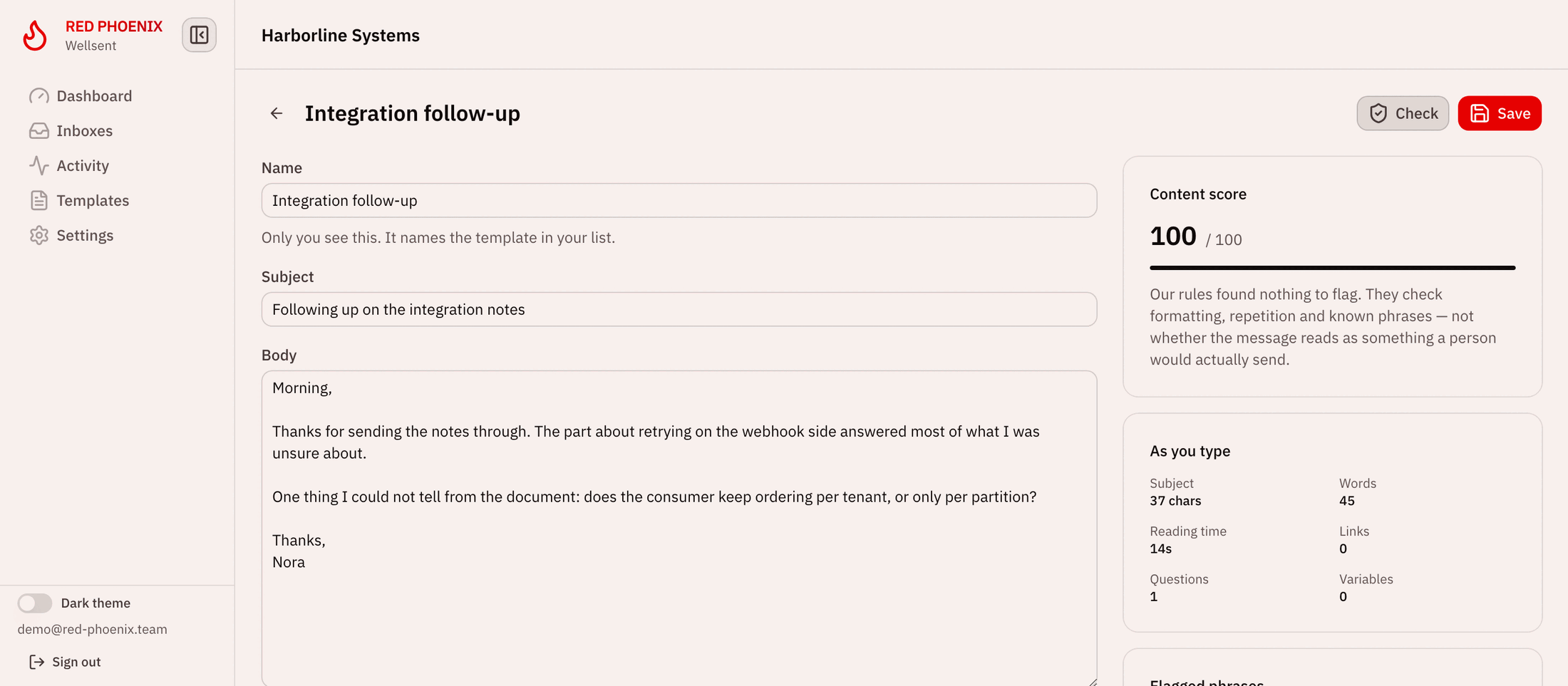
Warm-up only works if the mail looks like mail, so the templates are yours to write and the editor scores them as you type: subject length, reading time, link density, spam-lexicon hits, how much of the body repeats itself. The thresholds come from the API rather than the bundle, so they can be retuned without shipping a release. When a draft is ready, Check Template sends it from your own inbox to pool mailboxes across several providers and reports where it actually landed, per provider. That is a real answer, not a prediction.
What a subscription never gives you
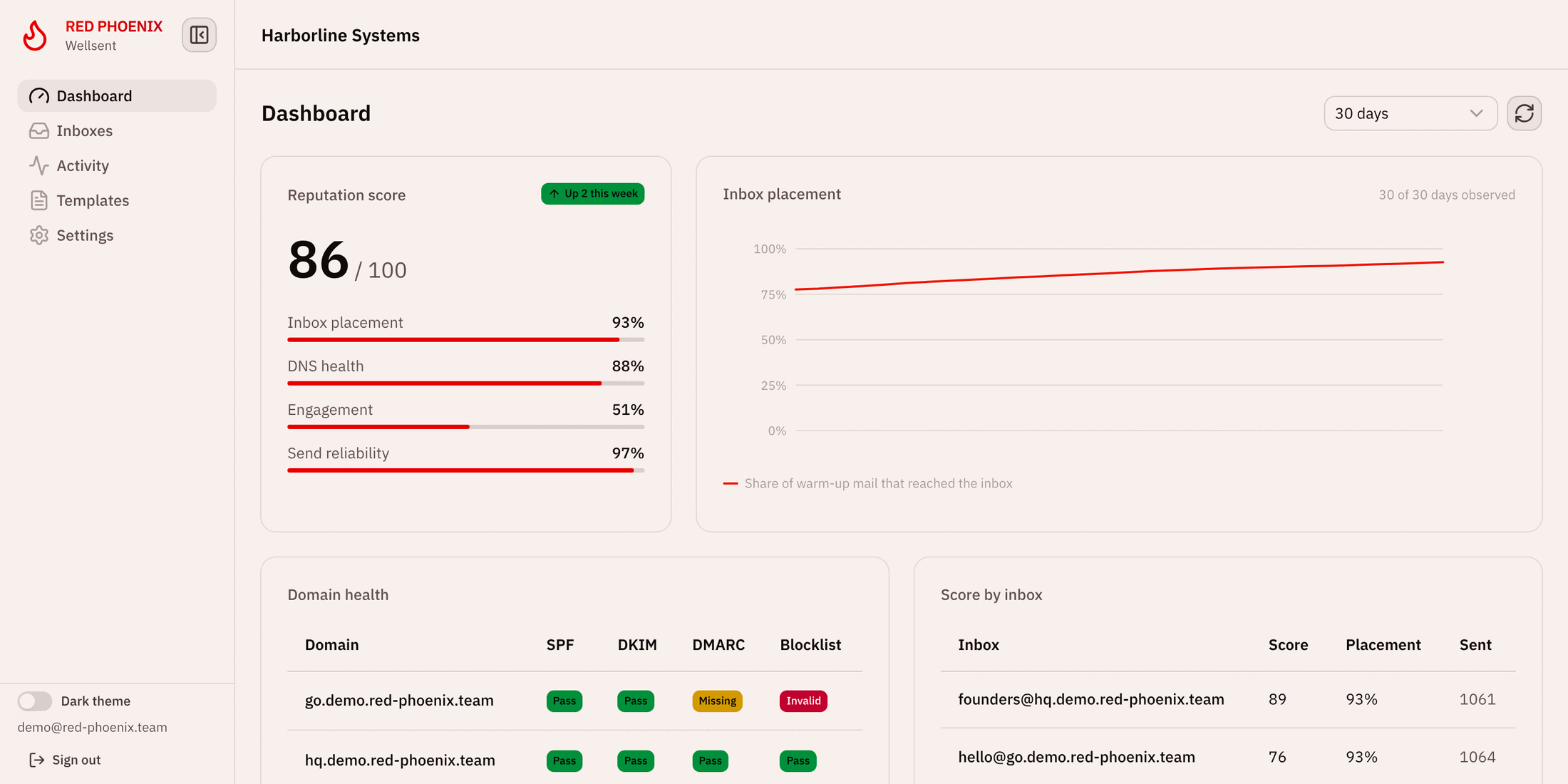
One install covers an entire client book. Every workspace is a tenant, so onboarding a new client costs nothing per seat: you add them, not another line on an invoice. It runs on a single VPS you control, with the pool, the mailboxes and the whole message history sitting in your own Postgres. And because the scoring is open rather than proprietary, the dashboard names the fix: a missing DMARC record, a domain sitting on a blocklist, a template leaning too hard on links. Every threshold behind those verdicts is a setting, not a vendor’s secret.