Postlude
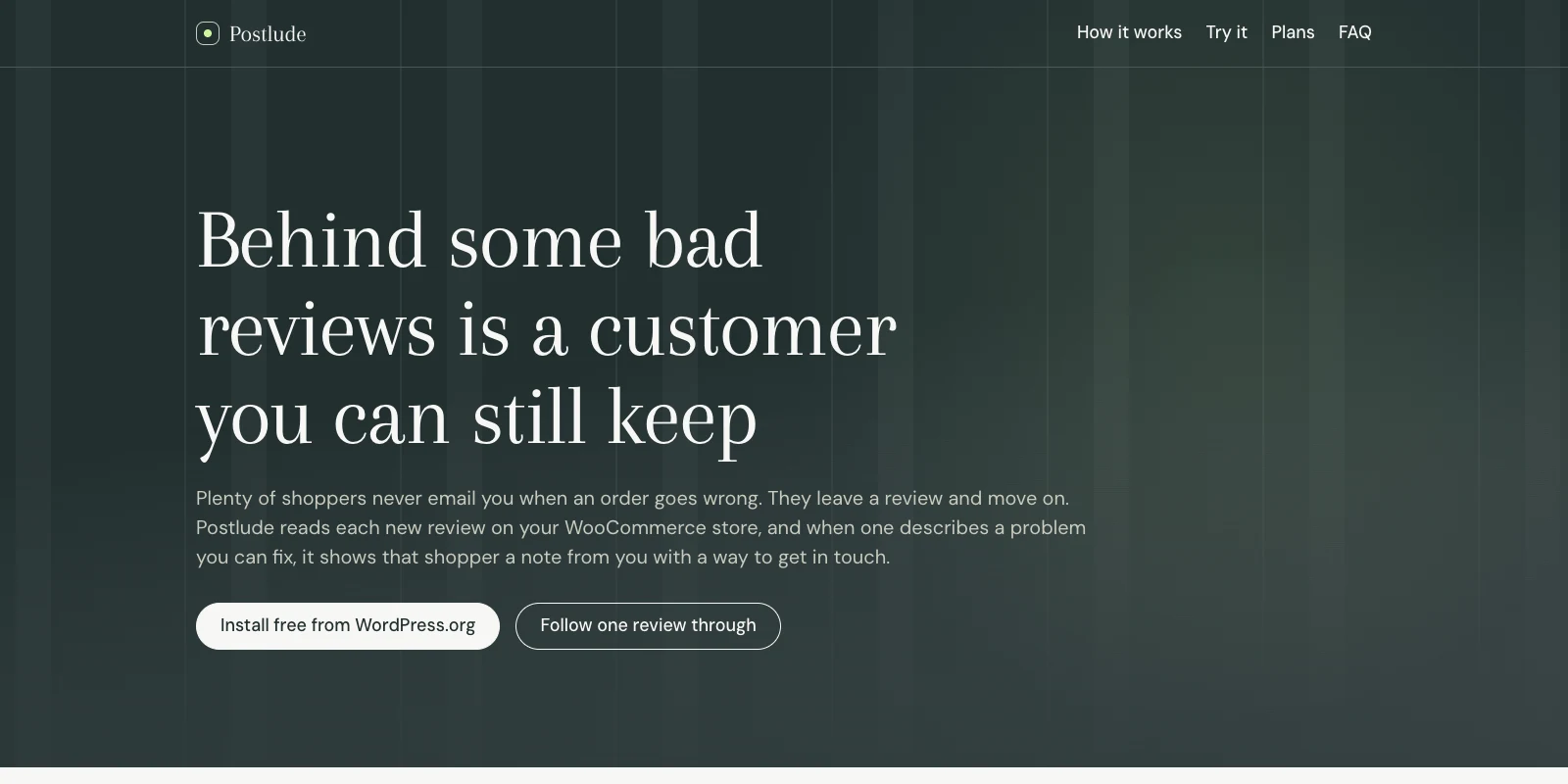
We’d just received early access to Jev and wanted to try it on a real problem. Four days later, Postlude was on WordPress.org: a WooCommerce plugin that spots problems in reviews and gives the customer a private way to ask the store for help.
It started with a model we wanted to try
On 21 September 2026, we’d just received early access to Jev and wanted to see what we could build with it. Customer reviews gave us a useful problem to work on. Someone receives a mug with a broken handle, leaves a review and moves on. The store might happily send a replacement, but the customer hasn’t asked for one. Could we make that conversation easier to start?
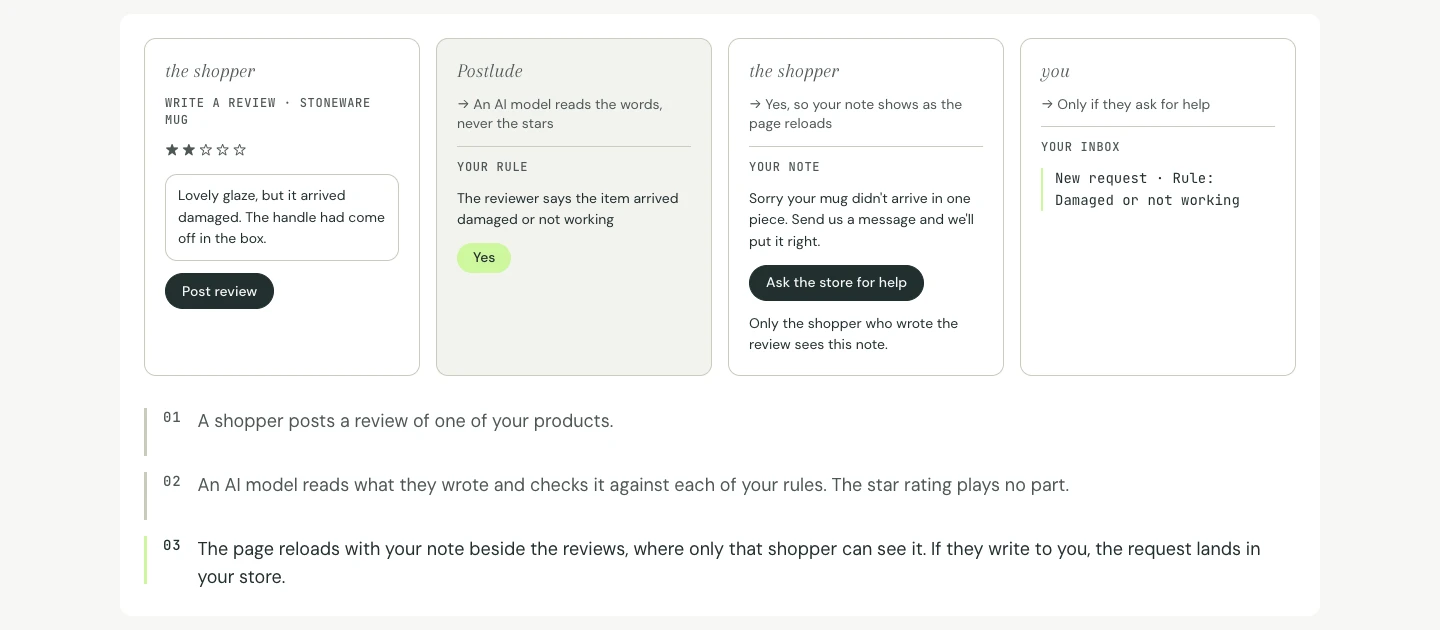
That became Postlude. A store owner writes a rule such as “the item arrived damaged” and a short offer of help. When a review matches, the person who wrote it can see that offer beside their review and contact the store. Everyone else sees the review as usual.
What do we actually need the model to do?
We used Jev to check whether a review describes the problem in each rule. It reads for meaning, so the owner doesn’t have to list every way someone might describe a damaged delivery. The owner still writes the message and decides what help to offer. We wanted the model’s judgement on the review; the store knows what it can do for the customer.
We left star ratings out of the decision. A five-star review can mention a broken handle. A one-star review might say nothing the store can act on. Reading the words is more useful here, though the model can still get them wrong. Store owners can mark a match as incorrect.
Giving the store something it can use
We built the analysis service in Rust and connected it to a WooCommerce plugin. Rules and customer requests live in the WordPress admin, so there’s no separate dashboard for the owner to keep checking. When a customer asks for help, the store gets an email and the message appears on its Requests screen.
Some problems only need a tag for the owner to look at later. Others deserve an offer of help straight away. Each rule supports either choice, and older reviews can be checked in the background too. If the owner rewrites a rule, we label earlier matches as having been judged under the old wording. They can then choose whether to check those reviews again.
When a review goes unchecked
If the model service is down or the store has used its allowance, a review may go without an offer. We accepted that limit because the review itself needs to go through normally. Postlude leaves publication and moderation to WordPress and the store owner.
The data needed some care too. Review text goes to our analysis service and the model provider; our service doesn’t save it or put it in logs. The customer’s follow-up message stays in the store’s database. Before enabling Postlude, the owner sees what will leave the store and where it will be processed. Installation alone sends nothing.
Four days later, ready to install
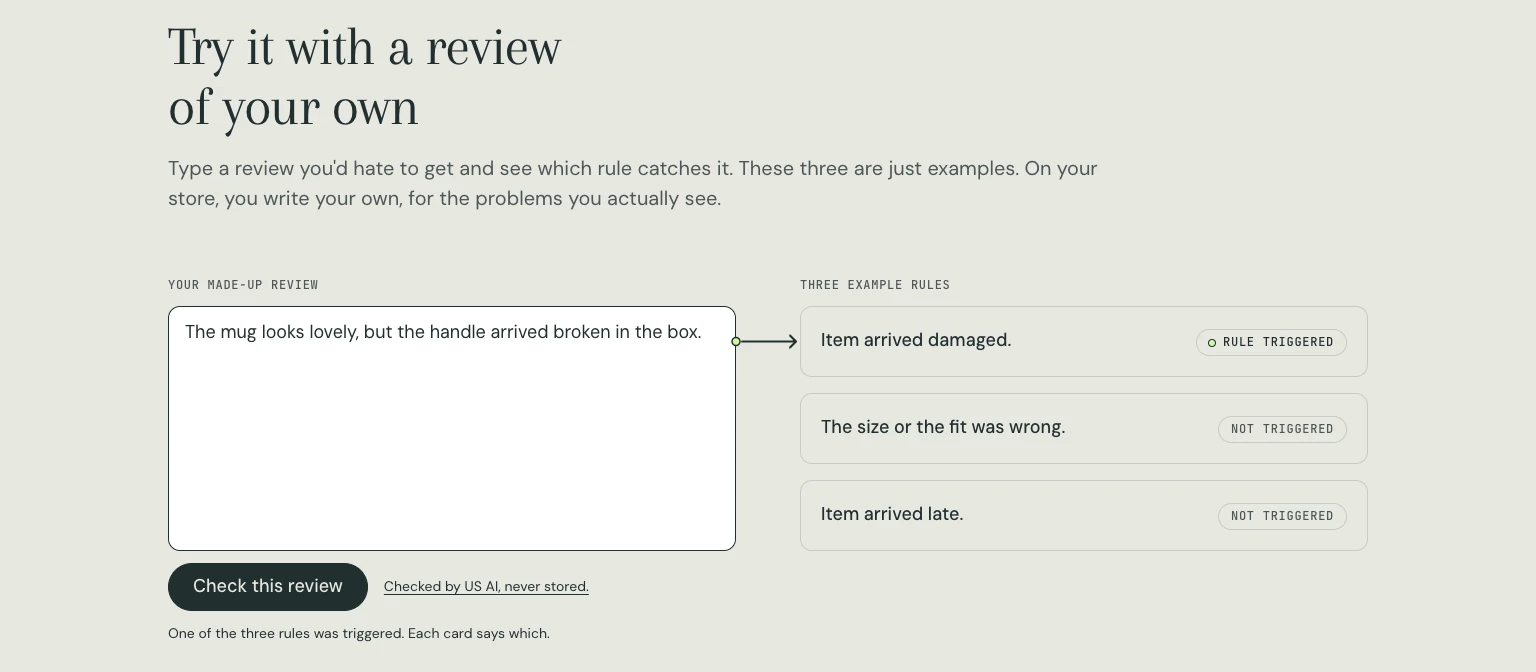
By 25 September, the service was deployed and Postlude was available on WordPress.org. A store owner could install it, register from the plugin and write their first rules. We also built a website where anyone can try a made-up review and see which rules it matches before adding the plugin to their store.