Buyback tools for Pokemagic
Pokemagic already had a store and a way for collectors to sell their cards. We made buying rules editable, built a shared card catalogue and connected it to the store and buyback tools, with support after deployment.
When a price change needs a developer
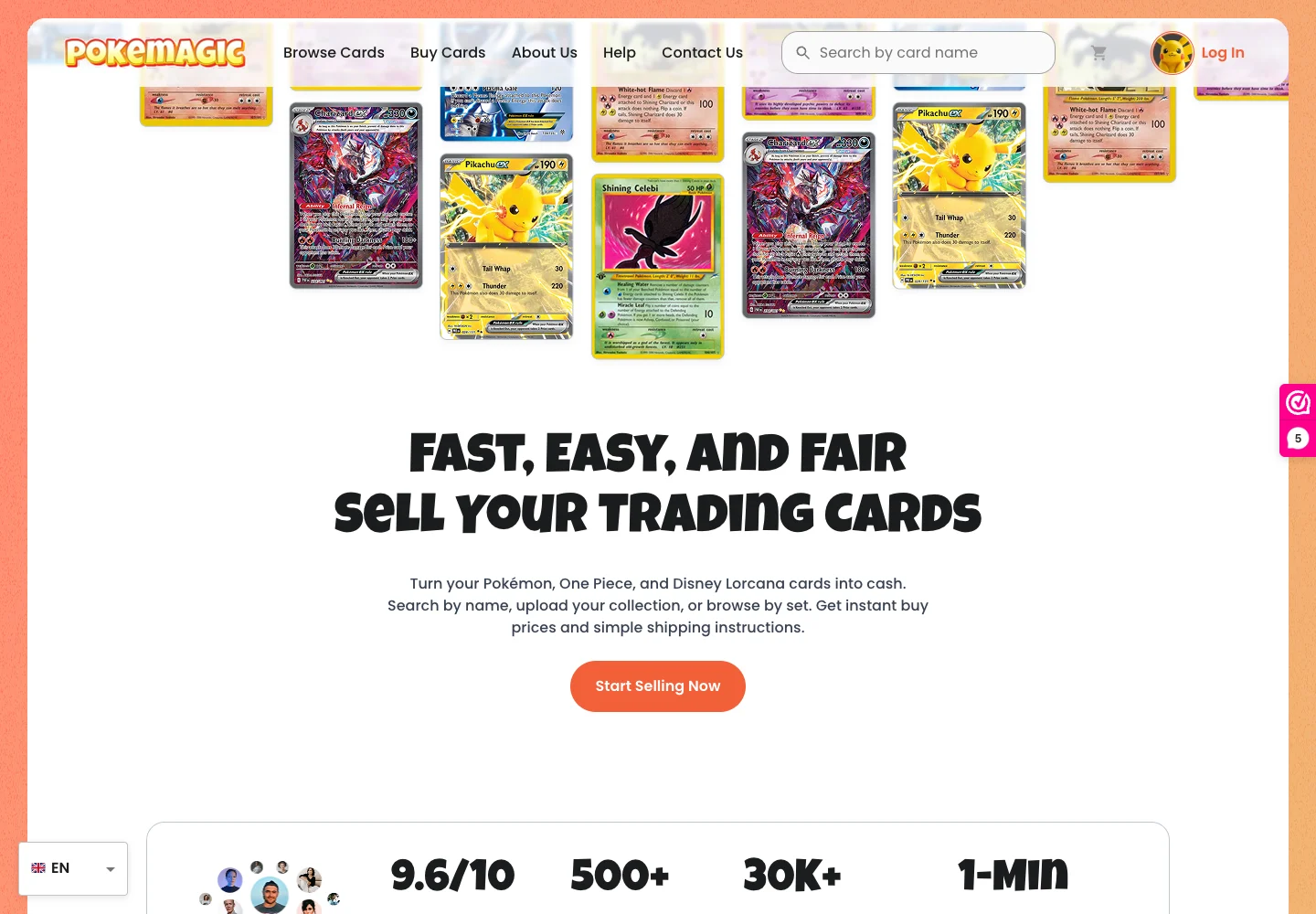
Pokemagic buys and sells trading cards. When we joined, its store and buyback platform were already running, but changing the rules for buying prices meant changing code. We made those rules editable so the team could adjust them without waiting for a developer.
Giving the team the controls
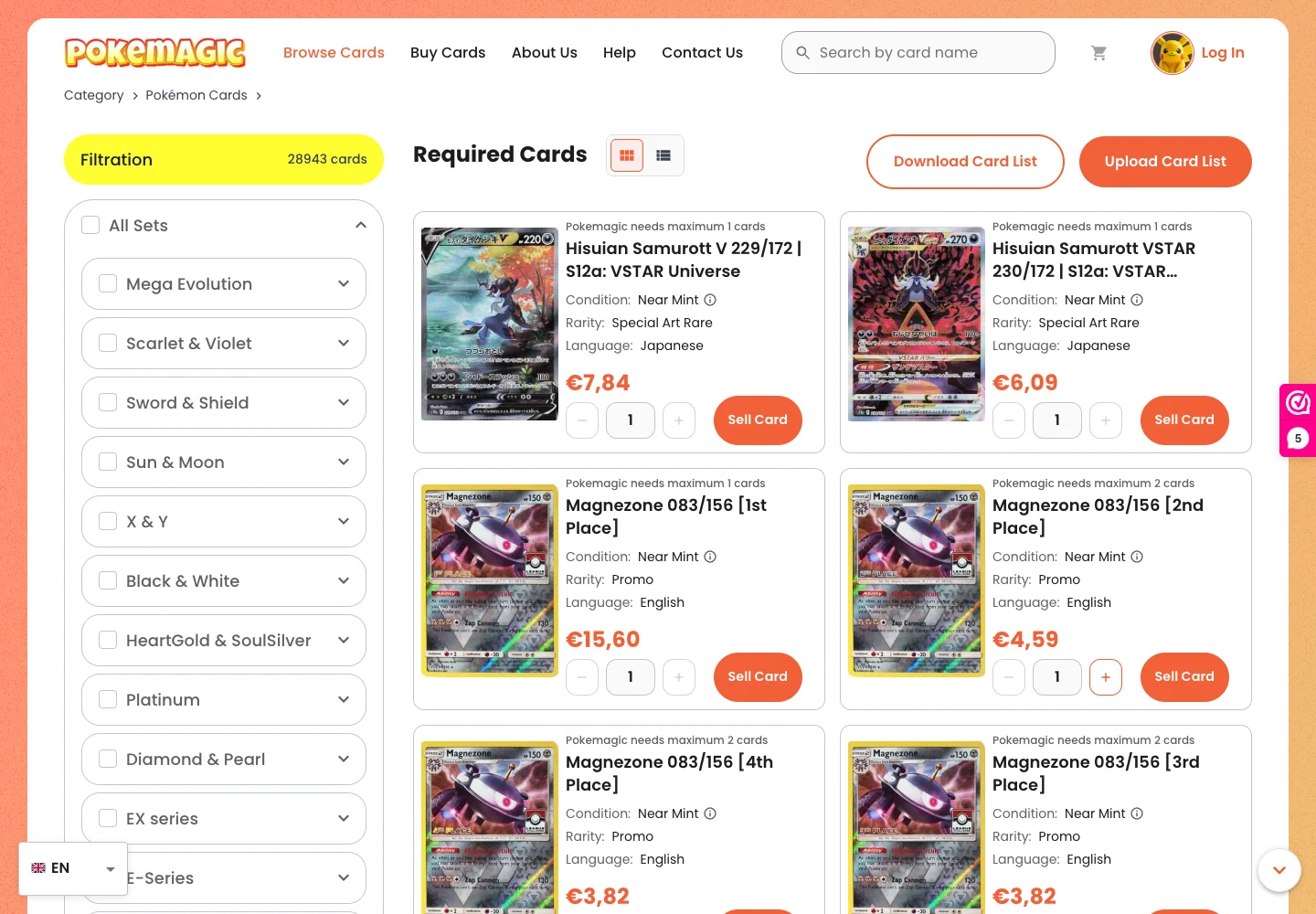
We made the buying rules editable, with room to account for a card’s condition, its type and how much stock the business already held. The team could change its buying policy without asking us to rewrite a formula.
Selling prices needed a different kind of control. We brought market-price comparisons into a review queue, where staff could look at a suggested change, approve it or leave it for later. Approved changes go through to the WooCommerce store. The team still decides when a price should move.
We also fixed order numbering and preserved the order in which customers submitted their cards. Small changes, but useful when someone has to work through the list.
Keeping up with new sets and cards
Each new set brings more cards to catalogue. We built a workflow that checks a source catalogue on a schedule for new sets and cards, then brings in details from external sources. It parses the incoming data into consistent records, with names, card numbers, rarity and images stored in their own fields.
Those records give the team something it can work with. Staff can inspect a card, correct its details or fetch more information before sending it to the store. Their corrections are protected when the next source update arrives.
The same card, or a different printing?
A card name isn’t always enough to identify what someone is buying or selling. Different printings can look almost identical, and the store’s existing products had to be matched to the right catalogue entries. We improved the matching and gave staff a way to correct individual links when the system couldn’t get them right.
We used set details and card numbers alongside cleaned-up names to match records, keeping different printings separate. When a match is ambiguous, the system leaves it unresolved so staff can check it.
Getting the cards into the store
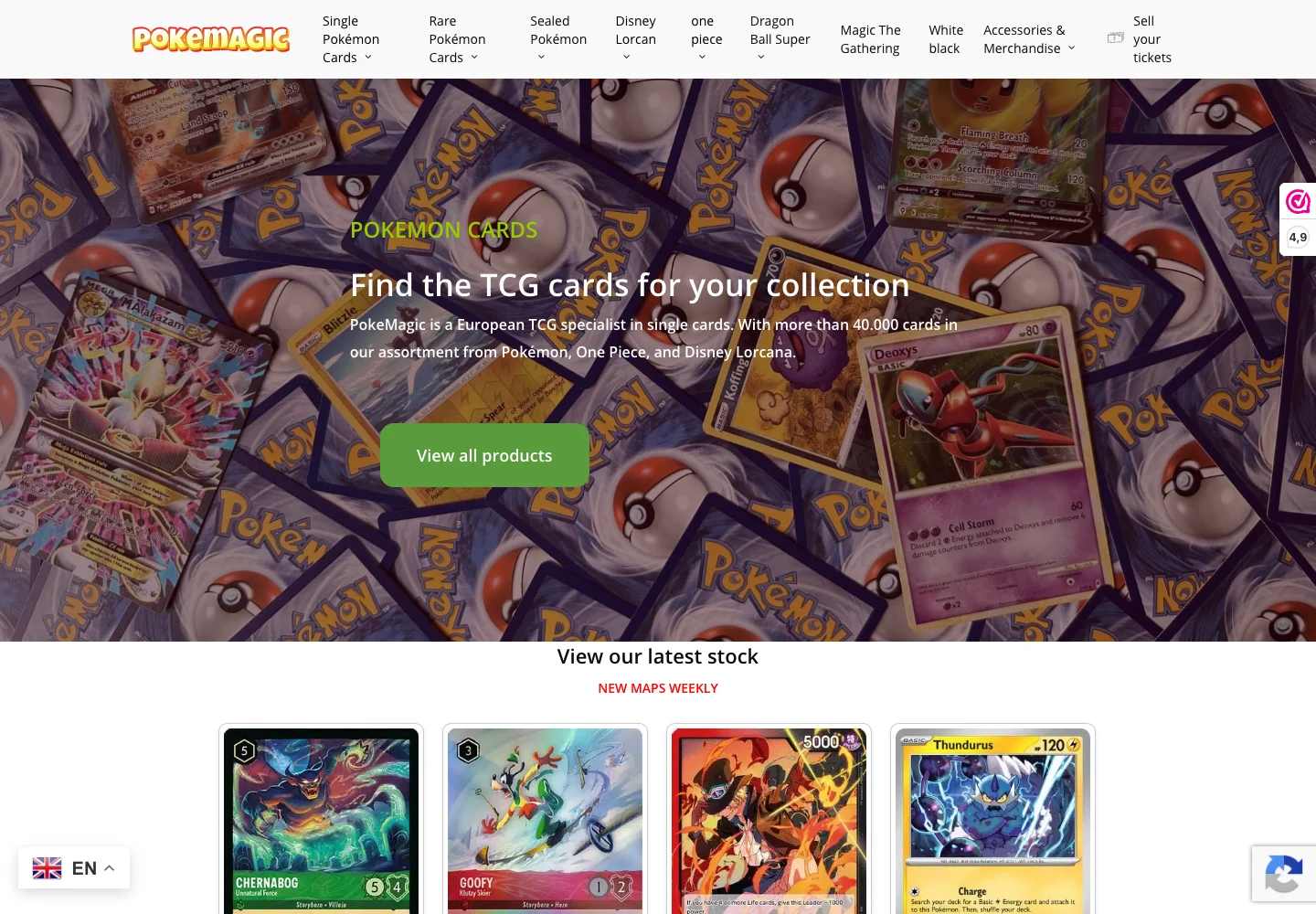
Staff choose which cards to send to WooCommerce and preview the import. They can map the catalogue’s categories and attributes to the store’s, link existing products and bring in new ones as drafts for review. An interrupted import can be recovered or cancelled, and failed items can be retried.
The same catalogue also supplies card details and market prices to the buyback tools. That connects the work of preparing a card for sale with the data used to calculate an offer when a customer wants to sell one.
Working through the details together
We deployed the changes and supplied guides for the team using them. As the team used the catalogue, we continued refining product matches and correcting links to existing store items.
“Red Phoenix took full ownership of my project and fixed every issue without complaint or extra charges. After past developers left me with half-working systems, that made all the difference.”