Hidoba Research
Hidoba Research white-labels Voice AI and digital twins. One of their customers needed it reshaped around their own business. We cut sign-up to three steps, moved four more into the console behind it, and rebuilt the dashboards, admin panels and access rules for its three roles. Eighteen days, brief to handover.
The gap between capable and usable
Their customer was selling to independent professionals: people who run a practice alone, and who would sign up with nobody sitting beside them. The hard engineering was already there. What was missing was the path from an invite link to a practice that works. We had eighteen days in July 2026 to build it.
What we owned:
- Onboarding, self-signup and invite links
- The professional dashboard, earnings and client list
- The admin and superadmin panels
- Console navigation, routing and a shared profile
- Role-based access rules and their enforcement
- Subscriptions, credits and gifting on Stripe
- The end-to-end test suite
Three steps rather than the whole product
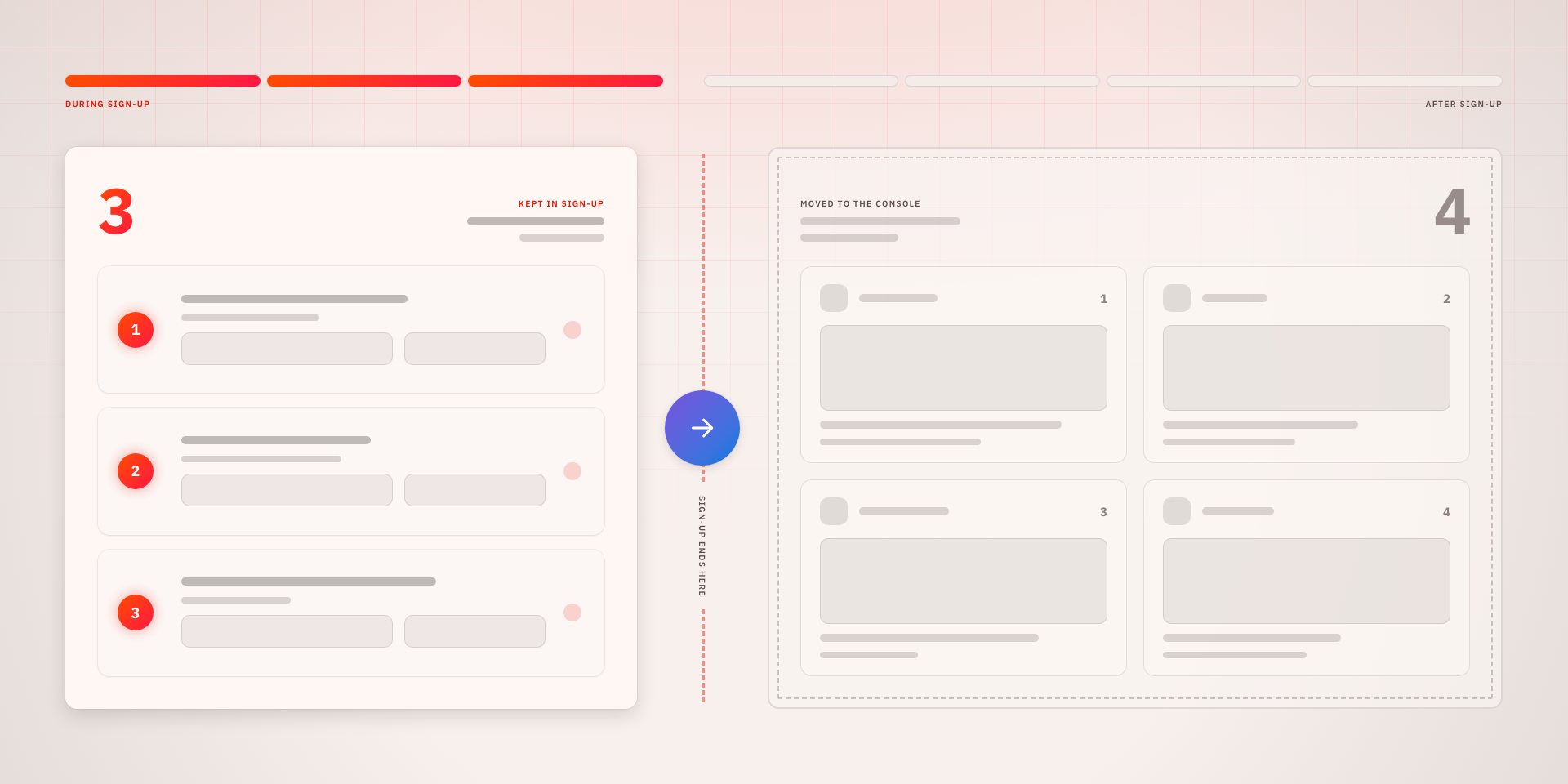
The wizard we inherited asked a new professional to write a persona, upload a knowledge base, record and test a voice, and review the result. All before the product had done anything for them. That order works if you already know what you are building. It is the wrong one for someone with twenty minutes between appointments.
We cut it to three: consent, profile, subscribe. The professional agrees to the terms, says who they are, picks a plan, and the console opens. The other four did not disappear. They moved into the console, where whoever does them has already decided the thing is theirs.
Where did the four steps go?
Into a console that stays locked until onboarding, subscription included, is done. Setting up an assistant is the most interesting work in the product, and nobody does it well in a hurry, so it belongs after sign-up rather than inside it. The cost is that the console now has to be worth arriving at.
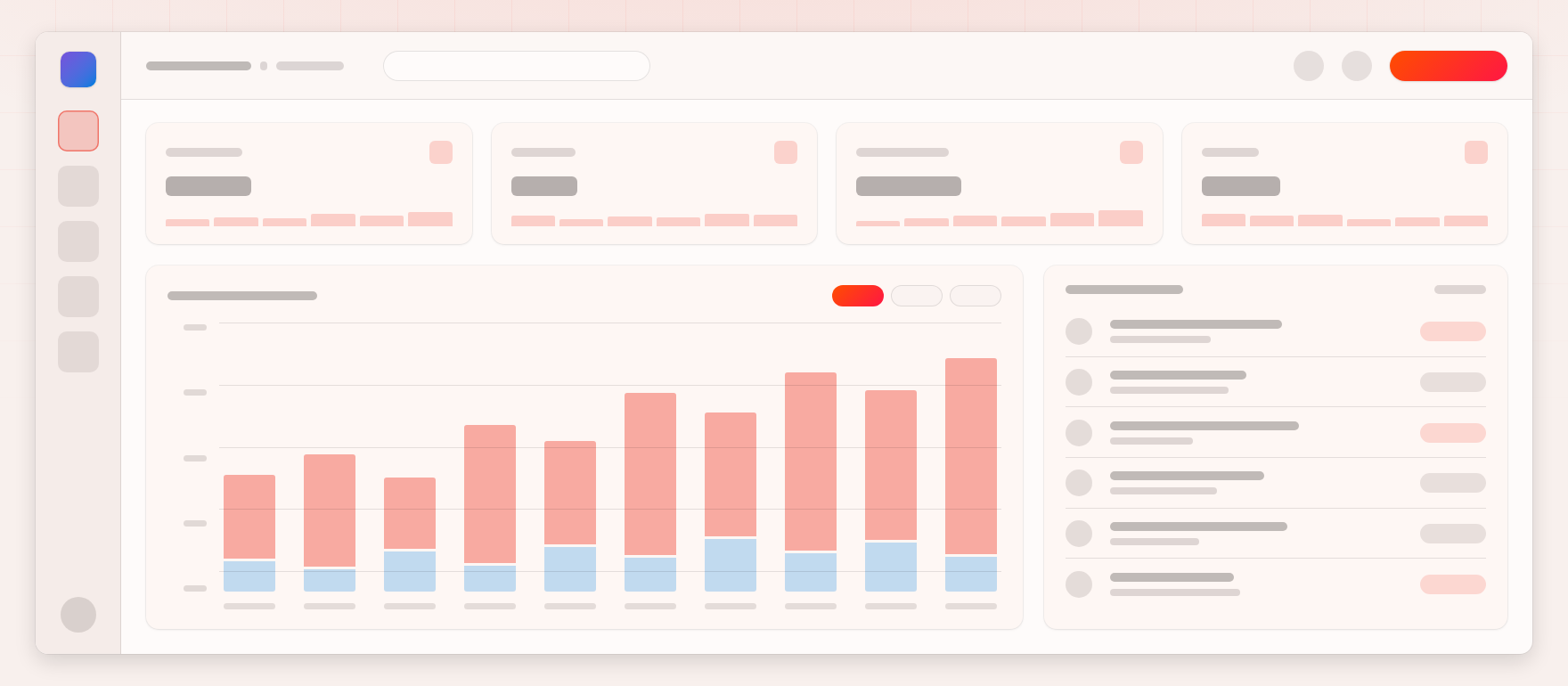
So the first thing a professional sees is a dashboard: recurring revenue by tier, total earned, and a client list with each client’s numbers beside the name. Earnings break down per client, which is the difference between knowing what a practice made and knowing which relationships made it. Subscribers get their own version.
Who is allowed to see what
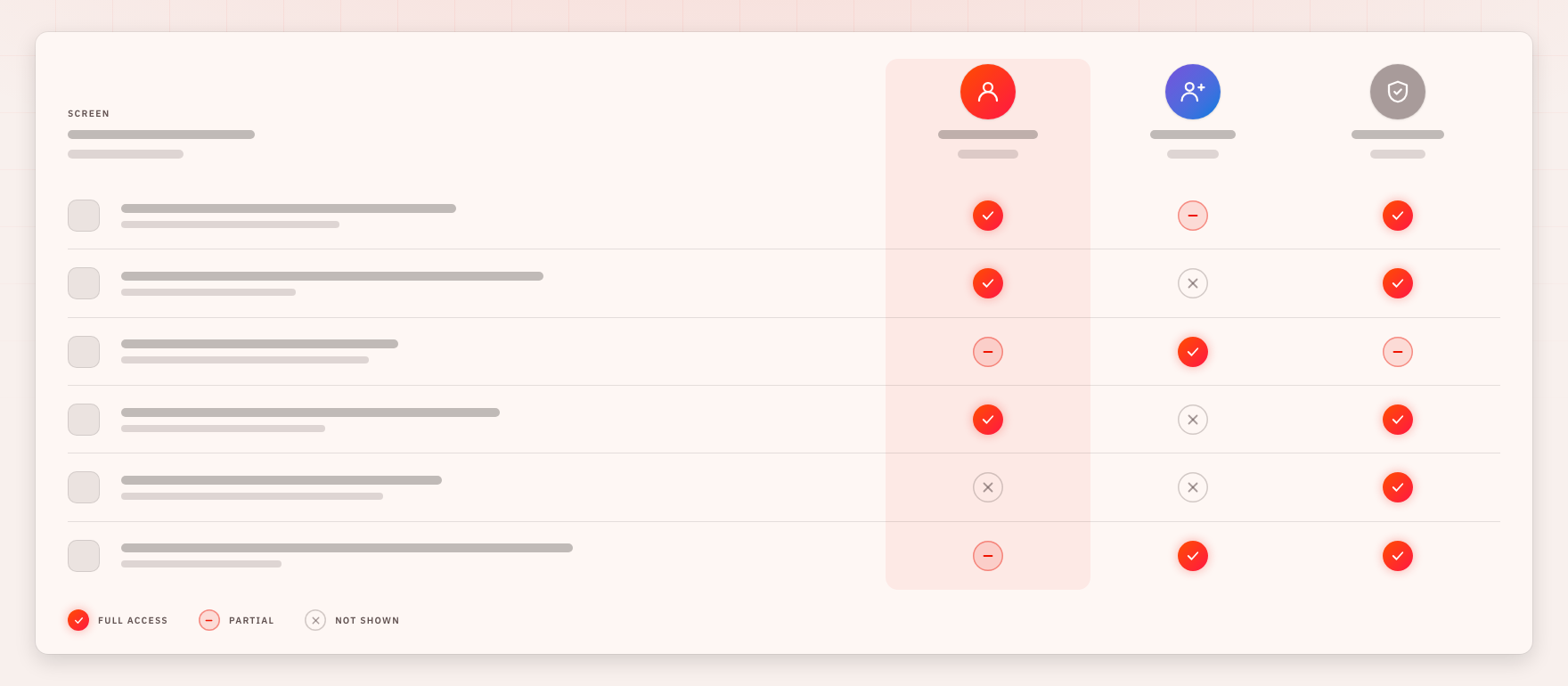
Three roles share one console: the professional who runs a practice, the client who subscribes, and the administrator who oversees the platform. When we arrived they shared little else. Profiles were three near-identical screens, pages sat at addresses that made sense only to whoever built them, and a few were reachable by people with no business reaching them.
We rebuilt the navigation and sidebar around the three roles, replaced the three profile screens with one that shows each role only what it may see, and gave support a way to view the platform as any account sees it. Then the gaps, all of them ordinary: the wrong account could open a practice, an invitation could be read by someone it was never sent to, and a dead invite link half-completed a sign-up instead of stopping it. None of that is true now.
What the tests click through
Testing the pieces alone would not tell us whether a stranger can get from an invite link to a working practice, or whether the permissions hold. So we wrote fourteen tests that drive a real browser: signing up, onboarding, subscribing, inviting, gifting credits, and each role walking into screens it is not allowed to see. One opens the voice interface and talks to it, so a broken build fails on what a customer notices first.
Where it landed
Eighteen days, brief to handover, as daily documented commits to Hidoba Research’s own repository. We closed every task on the list, on time, and a few that were not. Their customer now has a platform a professional can switch on alone: three steps to a live practice, with the rest waiting behind them.