getrandom.email
getrandom.email provides temporary inboxes and paid addresses for ongoing use. We built the signup-free service, subscriptions and mailbox API, with deletion recovery, permanent address reservation and checks on incoming delivery.
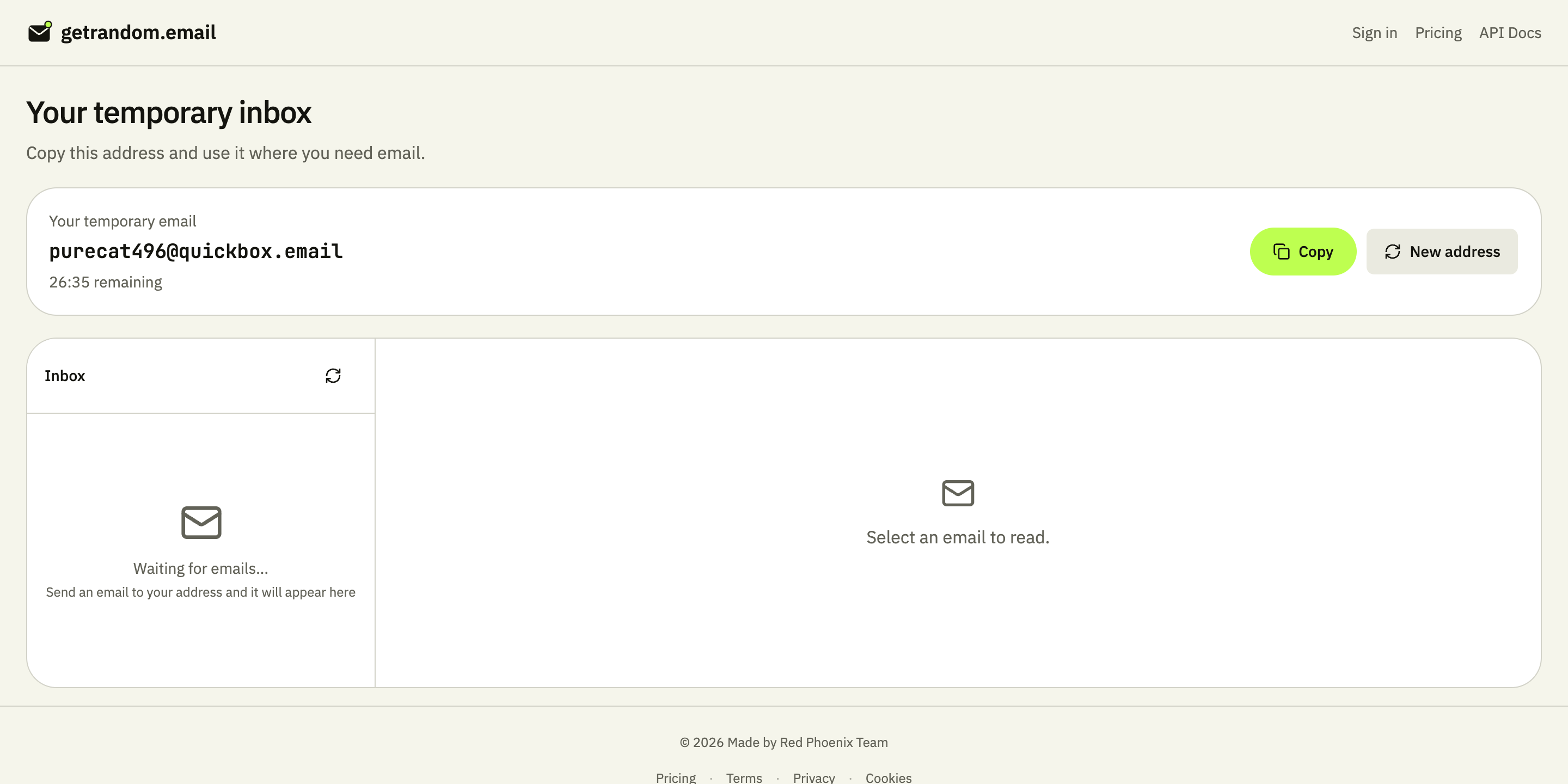
An address for now, with an option to keep it
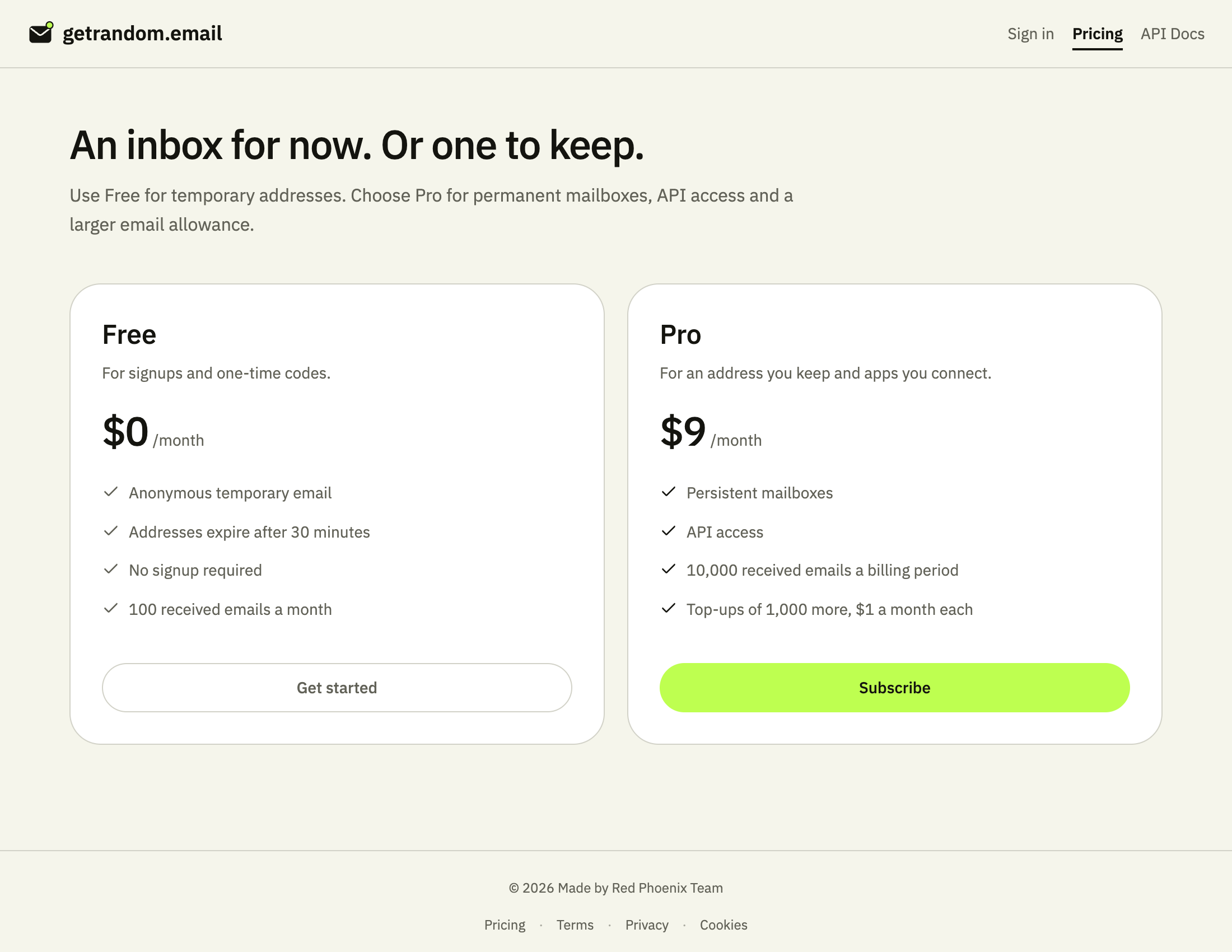
A temporary address lets someone try a service without sharing their everyday inbox. We built getrandom.email with an address available immediately, without registration, and incoming messages appearing automatically. The free mailbox lasts thirty minutes. Paid subscribers can retain addresses and manage them from a dashboard.
What happens when an address is deleted?
A deleted paid mailbox stops accepting mail, but its owner has thirty days to restore it before the contents are destroyed. The address remains reserved after that window and is never reassigned. This prevents a later user receiving messages, such as password resets, intended for the previous address holder.
An inbox other software can use
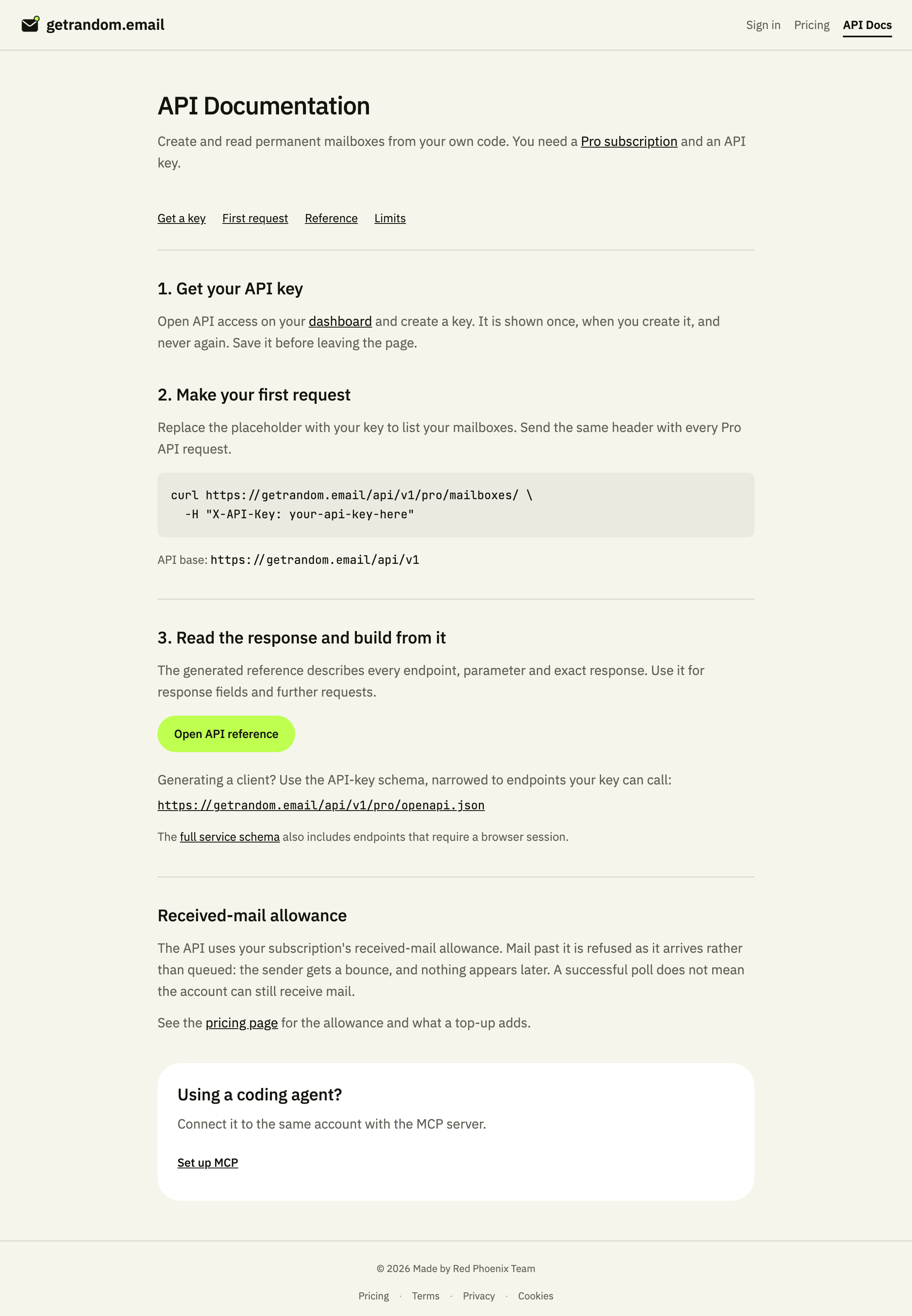
Paid subscribers can also access their mailboxes through an API, so their software can work with incoming mail without someone opening the website. The reference documents the operations available to an API key, while the dashboard remains available for managing the same addresses.
Checking delivery beyond the website
An inbox can look normal even when incoming delivery has failed. We added an hourly check that sends a message from outside the service through the normal mail route and waits for it to arrive. If it does not, the service alerts its operator. This checks the receiving path as well as whether the application is online.