News Monitor
A corporate-planning consultancy needed each employee to follow changing priorities across 500+ news sources. We built personal topic settings with AI-assisted, editable matching rules to help researchers start the day with relevant context.
Research priorities that change quickly
Our client, a corporate-planning consultancy, needed employees to start the day with the latest developments relevant to their work. Their priorities could change quickly, and standard aggregators did not offer the flexibility they needed. Each person needed control over their own topics, with a way to revise them as the questions they were researching changed.
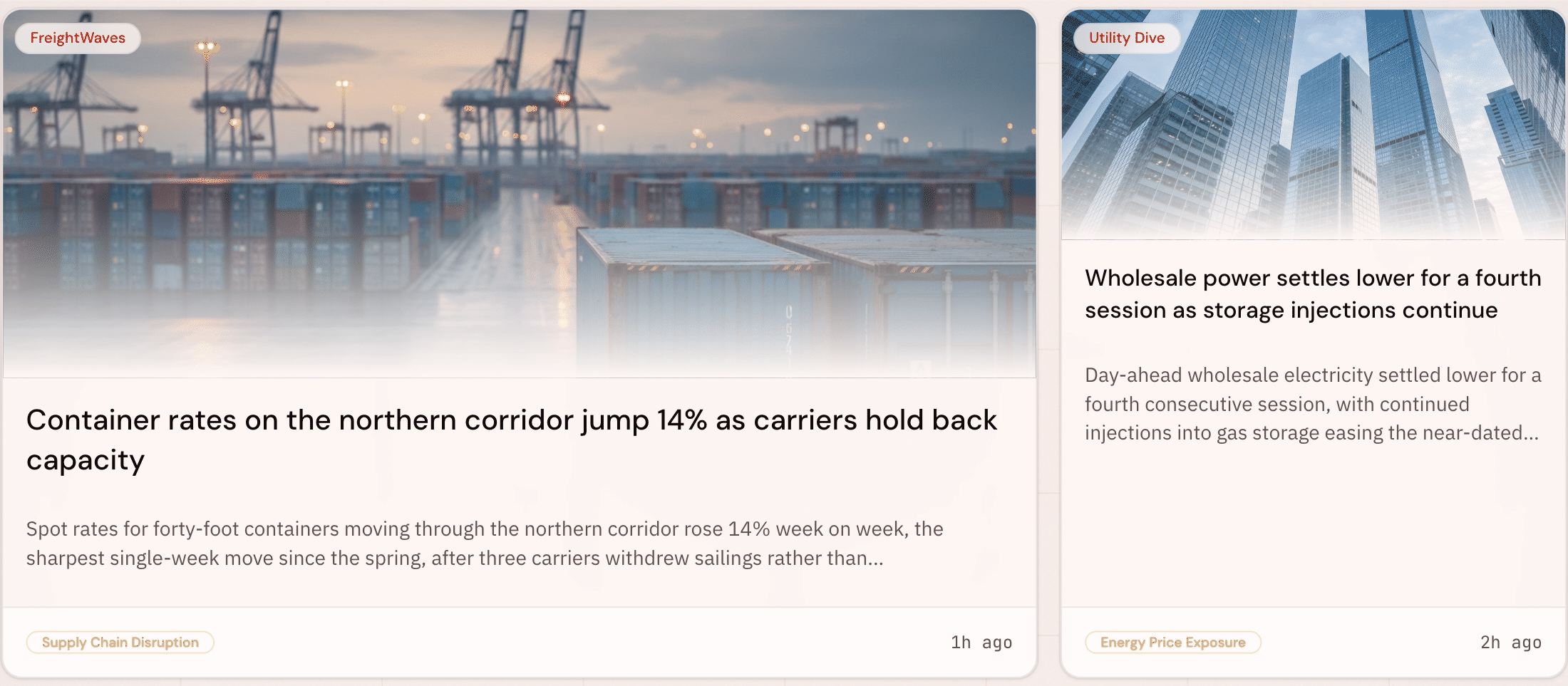
We built News Monitor to collect articles from 500+ sources producing about 15,000 articles a day. Each researcher can configure personal topics and review matches with their topic and publication time. AI helps turn a new description into editable rules, so changing a research focus starts with the question the person wants to follow.
AI proposes rules for each researcher to refine
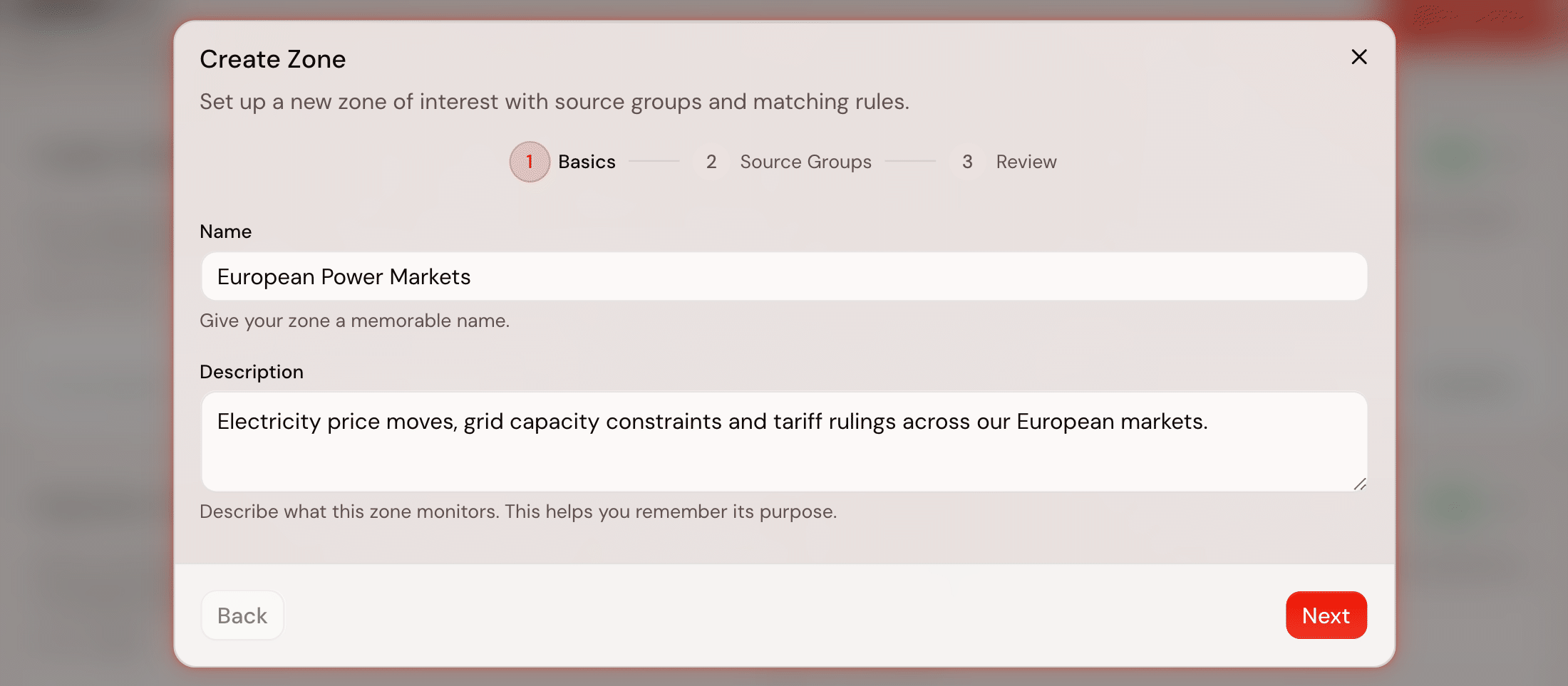
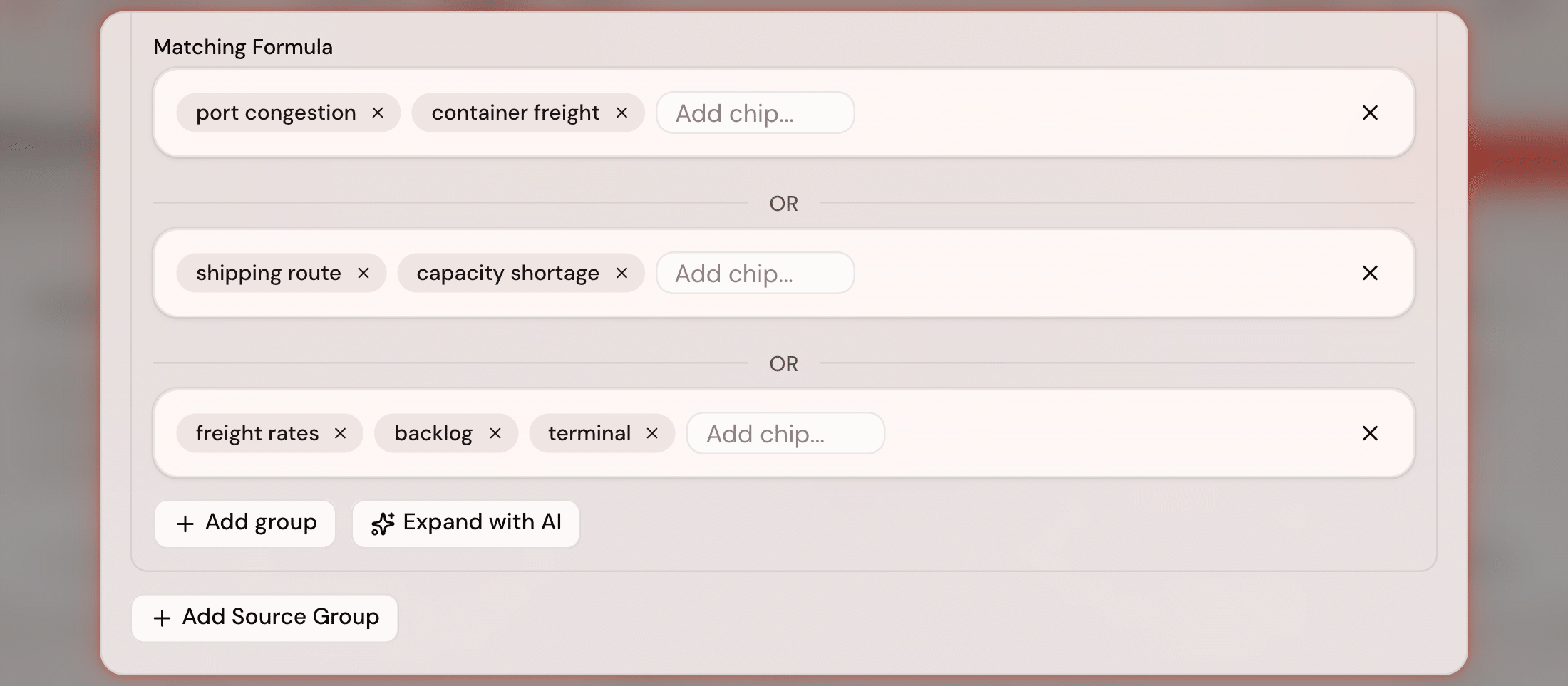
A topic, called a zone in the product, starts with a name and description. Each researcher can describe the coverage they want in ordinary language and ask an AI model to turn that description into groups of search terms.
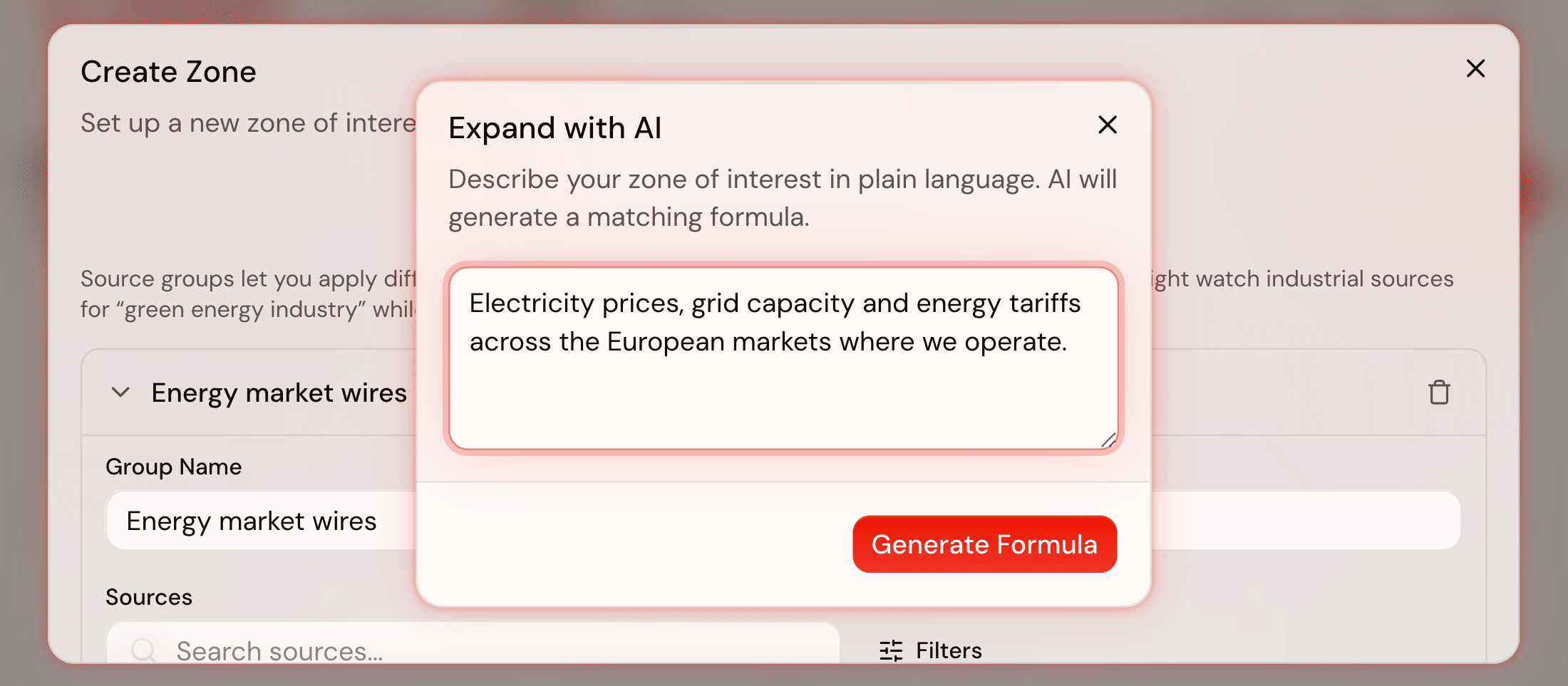
The suggestion is a draft. A term may be too broad, or a useful synonym may be missing, so we kept every group editable. Researchers can add or remove terms, change which ones must appear together and adjust matching sensitivity. They can see and correct the rule before relying on the articles it selects.
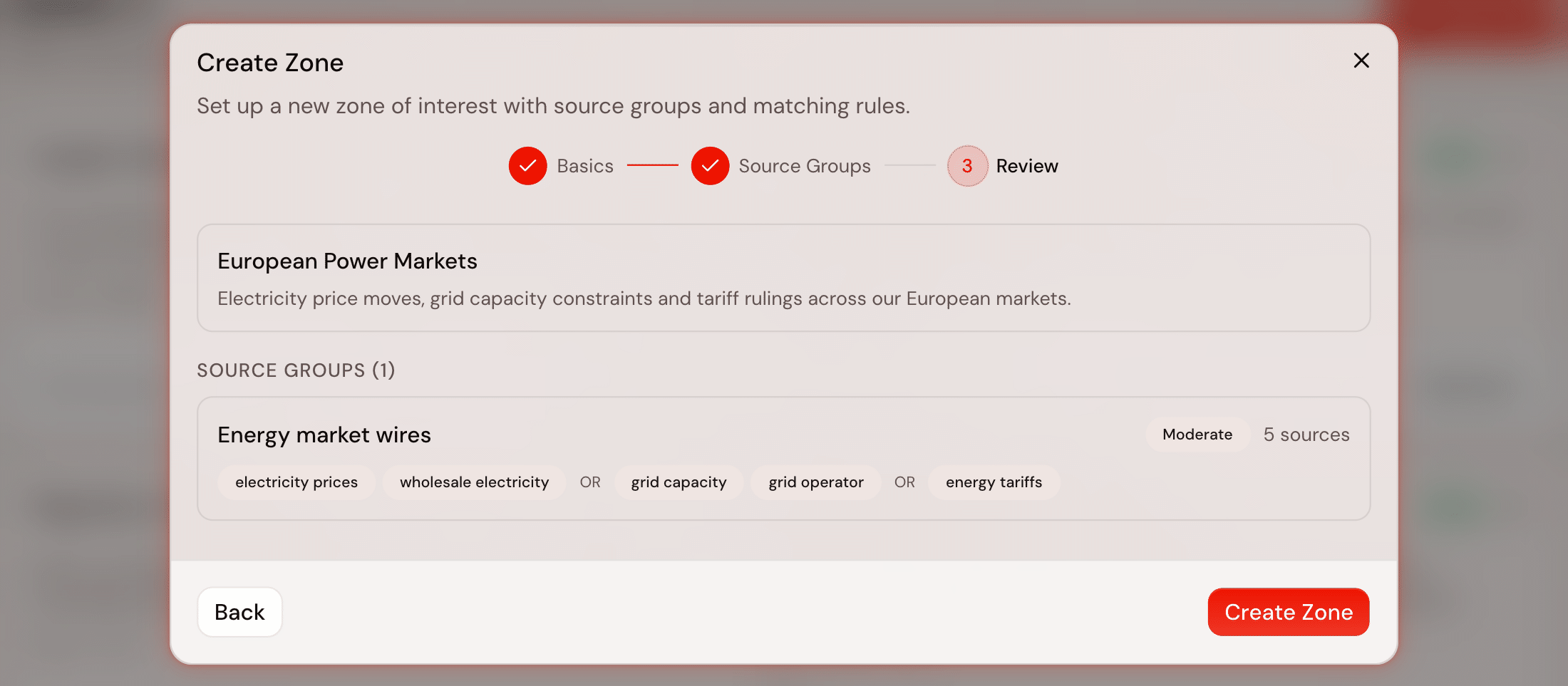
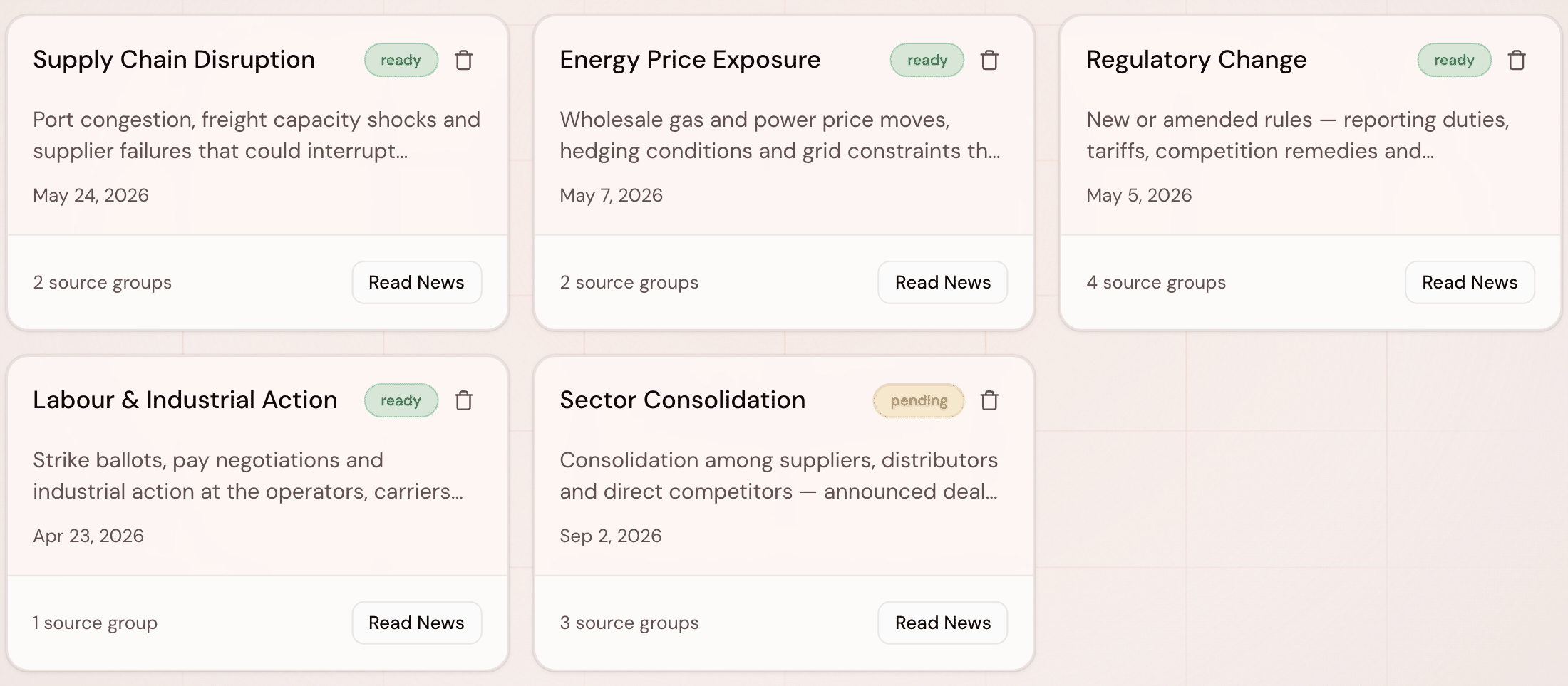
Before saving, the researcher reviews the description, selected sources and complete formula together. Saved zones show their configuration and processing status in one place, ready to revisit when priorities change.
Keeping the sources running
Each source has its own collection schedule, controlled by the team. Collection runs separately from article analysis so a slow analysis job does not delay the next fetch. An unresponsive feed can be investigated while the other sources continue to run.
Article analysis runs on hardware the client already had, without a graphics processor for AI workloads. That limited the models we could use. We chose models that fit the machine to identify named entities and assess paragraph meaning locally.
A catalogue the team can examine
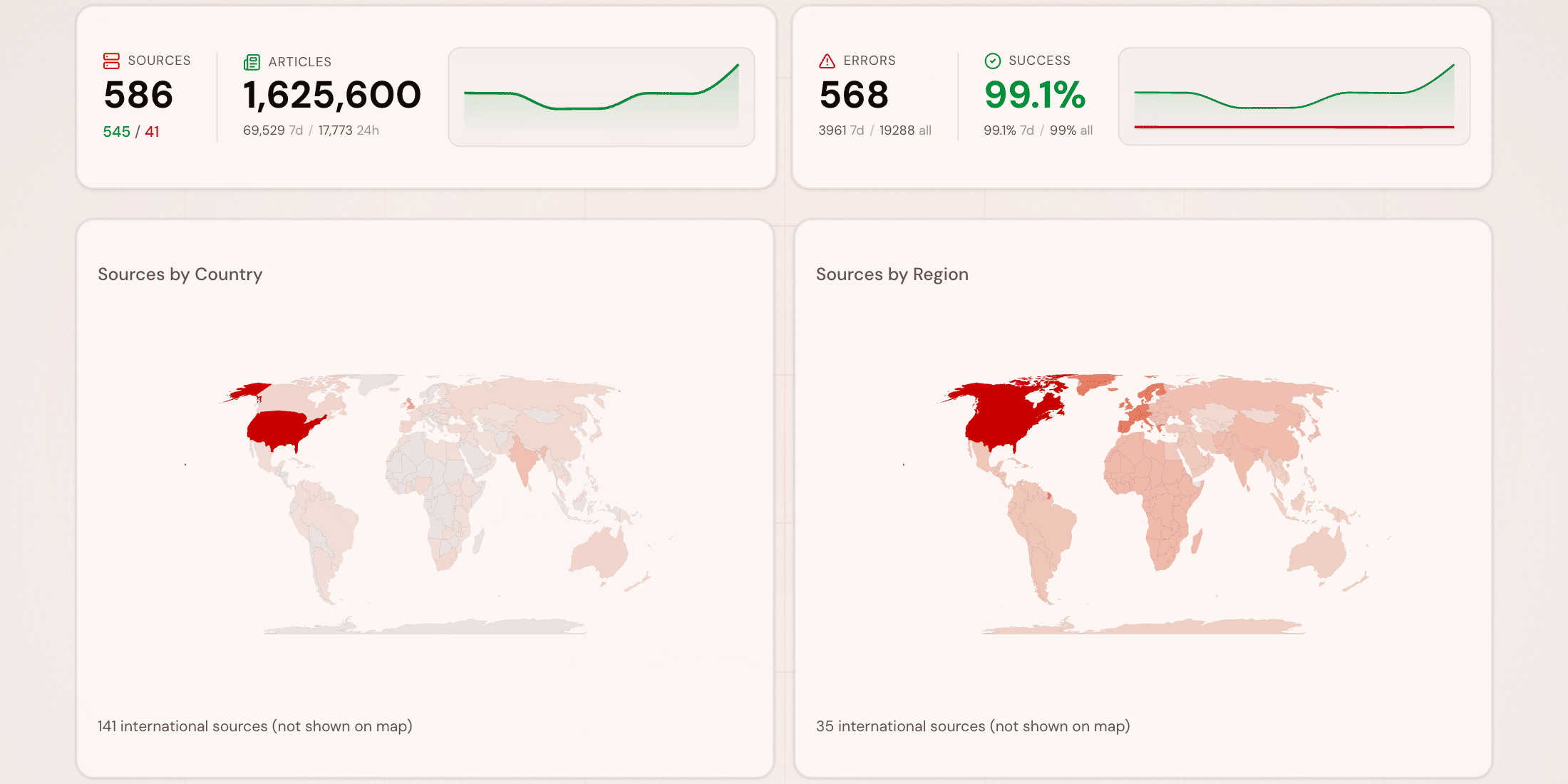
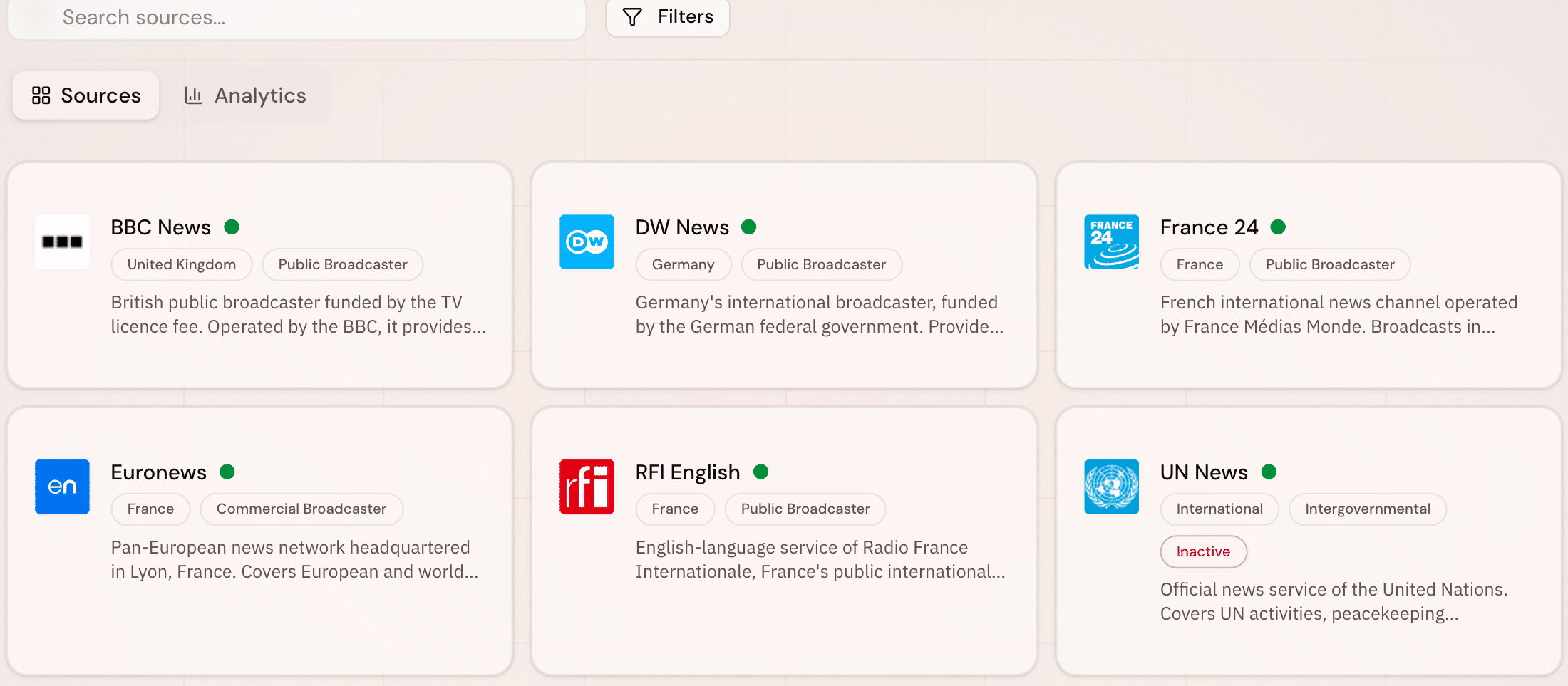
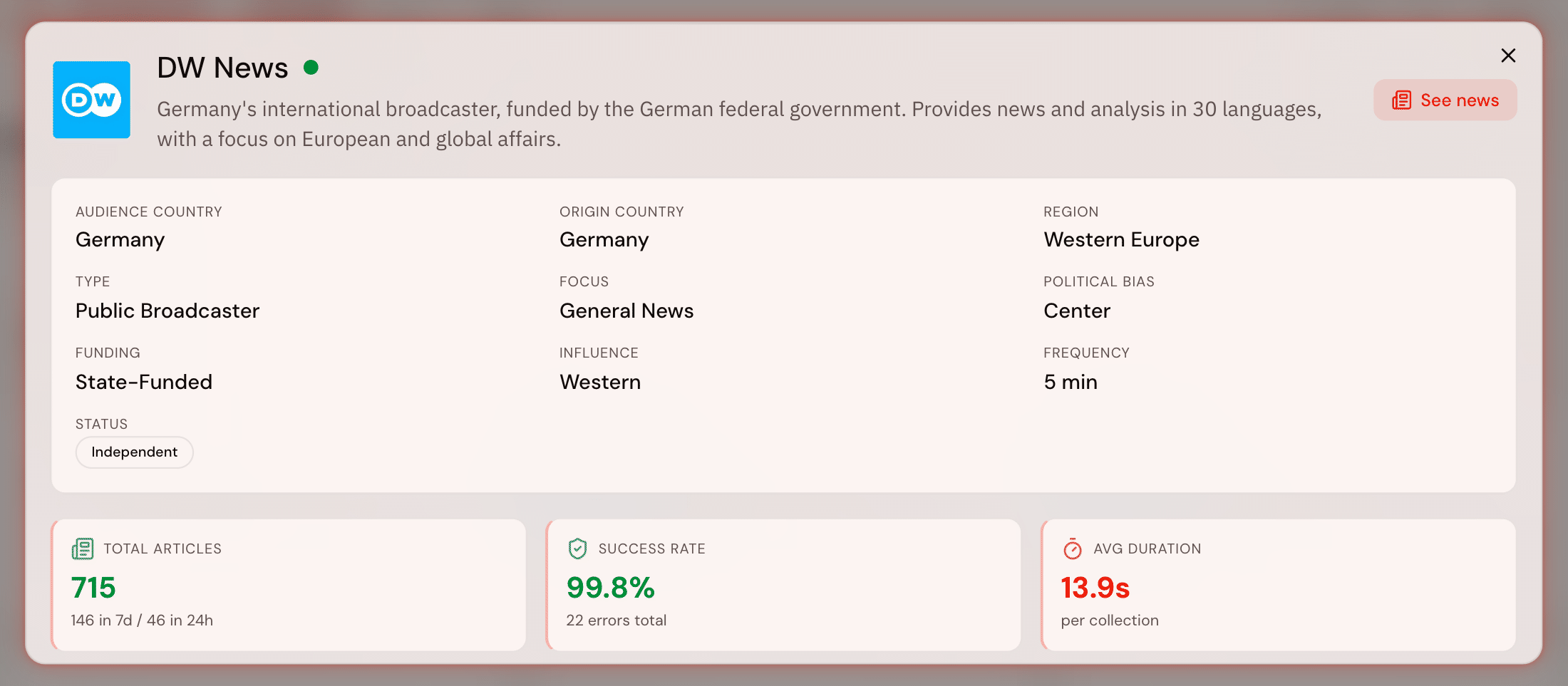
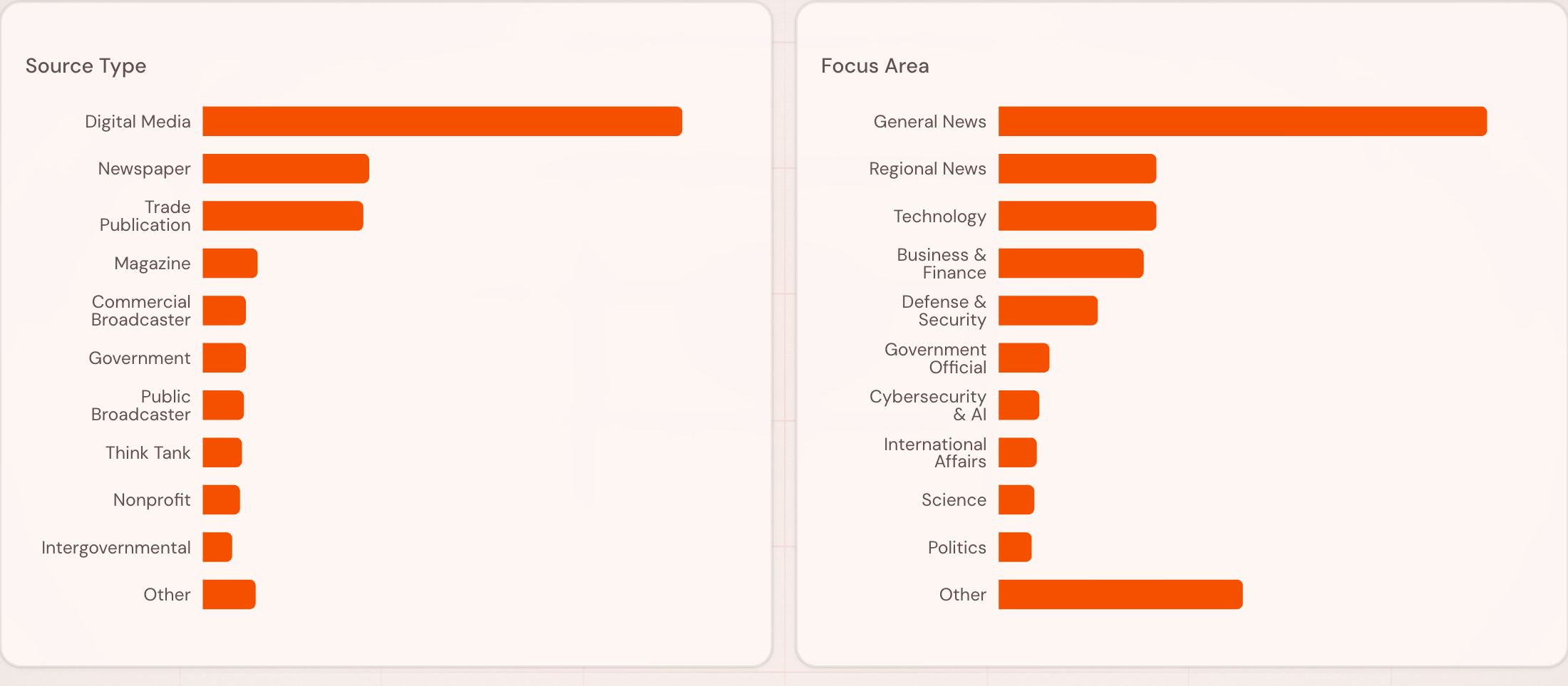
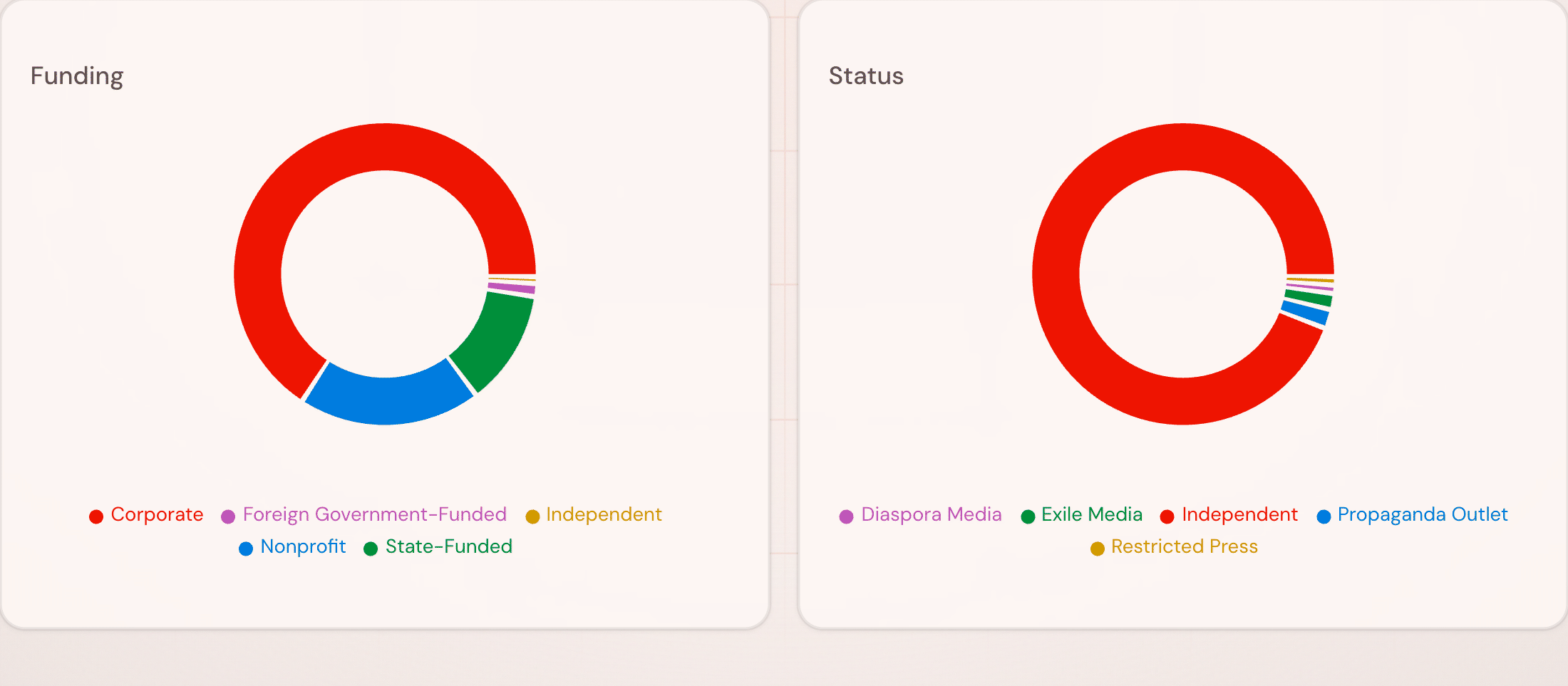
We retained the client’s classifications for outlets, including geography, audience, funding and subject focus. Source records pair that context with collection statistics, while maps and charts show the composition of the catalogue. The team can inspect areas with fewer sources and investigate inactive feeds using the same vocabulary it already works with.
From a match to a source worth citing
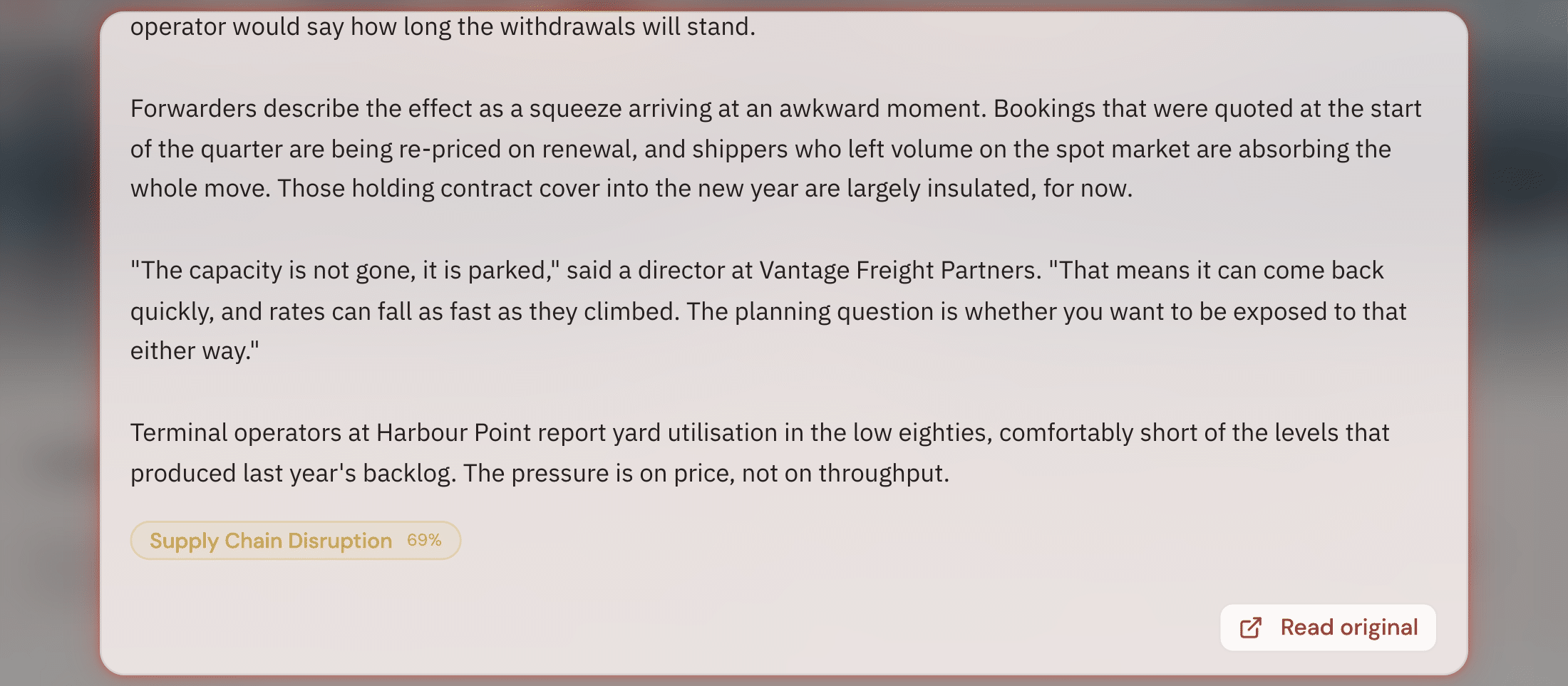
The reader shows the matched topic and score beside the article. Full text is available in the platform, with a link to the original publisher when the researcher needs to check or cite it. Relevance still rests with the person preparing the planning advice.
The first working platform was delivered seventeen days after the initial commit. Development continued over the following months as the consultancy used it in its daily work. Employees could revise their personal topics as priorities changed, while the team retained control of source schedules and the catalogue.